


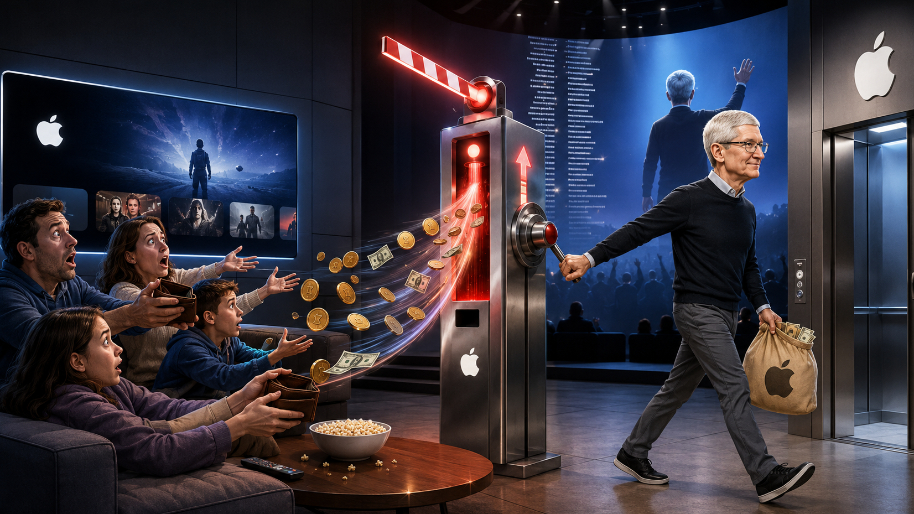
Remember when streaming was pitched as the affordable alternative to cable television? If the average person actually counted up all their subscriptions today, I suspect many of us would be better off going back to Dish Network.
Apple just made the math even worse.
The company raised the monthly price of Apple TV from $12.99 to $14.99, while increasing its annual plan from $99 to $119.99. The individual Apple One plan, which combines Apple TV with Apple Music, Apple Arcade, iCloud storage and other services, is also rising from $19.95 to $21.95 per month.
Existing subscribers will receive one month’s notice before the new prices take effect.
An additional $2 per month is unlikely to cause a mass cancellation. Apple surely knows that. Most people do not reconsider their household budgets every time a subscription becomes slightly more expensive.
But the cumulative increase is harder to dismiss. Apple TV launched in 2019 for $4.99 per month, making it one of the least expensive streaming services on the market. At $14.99, its monthly price has now tripled.
Apple would argue that the service has changed considerably since then, and it would have a point.
Apple TV began with a relatively small collection of original programs and no large library of older movies or television shows to keep viewers occupied between releases. It has since added acclaimed series including Ted Lasso, Severance, Shrinking, Pluribus and The Studio.
It has also moved more aggressively into sports and major films. Its F1 movie became a summer blockbuster, and Apple recently acquired the U.S. broadcasting rights to Formula 1.
The service is clearly more valuable than it was at launch. Whether it is three times more valuable is something each subscriber will have to decide.
Apple is also following the rest of the industry. Peacock recently increased its prices ahead of the new NBA and NFL seasons. ESPN plans to raise its streaming prices next month, while Netflix, Prime Video and YouTube Premium have already charged customers more this year.
These increases are gradually undermining the original economic case for streaming.
Consumers once paid one large cable bill for dozens of channels, many of which they never watched. They can now assemble their own collection of services, but obtaining a reasonably broad selection of television, movies and sports often requires several subscriptions.
The result is beginning to resemble the old cable bundle, only with separate bills and programming scattered across different platforms.
For Apple, however, the decision is about more than recovering the cost of producing television shows.
Apple reported $30.7 billion in services revenue during its fiscal third quarter, an increase of 12% from the previous year. The company now generates more than $100 billion in annual services revenue, making the division comparable in size to a Fortune 40 company.
That growth represents one of Tim Cook’s most important accomplishments as Apple’s chief executive. Cook, who will step down on Sept. 1 and become executive chairman, helped turn Apple’s enormous base of device owners into a recurring source of revenue.
Apple now has more than 2.5 billion active devices around the world. Every one of those devices provides another opportunity to sell cloud storage, music, television, games, warranties, applications and payment services.
This business is especially attractive because Apple does not need to sell another physical product each time it collects a monthly payment. An iPhone must be designed, manufactured and transported before it produces revenue. A digital subscription can renew automatically for years.
But Apple’s latest results also showed why the company may feel some pressure to keep raising prices. The gross margin of its services business declined by more than one percentage point during the quarter. Apple attributed the decrease to its mix of products and foreign-exchange headwinds.
Apple Music prices also increased by $1 per month in July, with the company citing higher licensing costs.
Meanwhile, Apple shares have fallen approximately 6% over the past month, largely because rising memory costs have created concerns about pressure on the company’s hardware margins.
At the time of publishing this article, Stocks.News holds positions in Apple, Netflix, Amazon, and Google as mentioned in the article.
Did you find this insightful?
Bad
Just Okay
Amazing
Disclaimer: Information provided is for informational purposes only, not investment advice. We do not recommend buying or selling stocks. Stock price discussions are based on publicly available data. Readers should conduct their own research or consult a financial advisor before investing. Owners of this site have current positions in stocks mentioned throughout the site, Please Read Full Disclaimer for details Here https://app.stocks.news/page/disclaimer