


LONDON (Reuters) -From a focus on how quickly tech-driven, frothy equity markets unwind, to the impact of the U.S. shutdown, there's plenty to mull over next week.
And don't forget China data, UK budget speculation and a U.N. climate change summit.
Here's all you need to know about the coming week in financial markets by Rae Wee in Singapore, Alden Bentley in New York and Amanda Cooper, Marc Jones and Libby George in London.
1/ BACK TO REALITY?
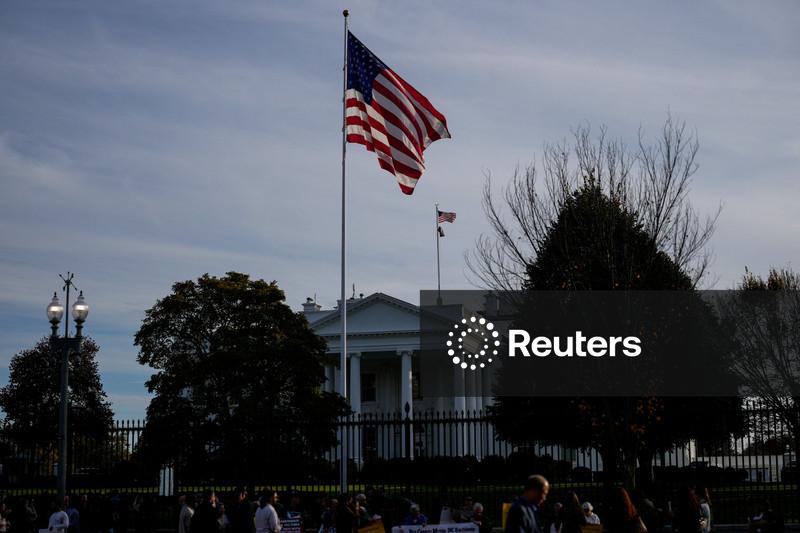
The week starts on an upbeat mood as the U.S. Senate on Sunday moved forward on a measure aimed at reopening the federal government and ending a now 40-day shutdown that has sidelined federal workers, delayed food aid and snarled air travel.
If an agreement is finalised, data must still be compiled and rescheduled, meaning a scheduled inflation release on Thursday is unlikely. So the data fog may continue for now.
The disruption since October 1 has surpassed the record shutdown in Donald Trump's first term as president.
Relief may prove temporary, as the impact of the shutdown on the economy emerges.
Others note that any agreement might be temporary, meaning markets could be back to shutdown watch in the not too distant future.
2/ LACKING DATA CHEER
As investors look past an uneasy Sino-U.S. trade truce, at least until things turn sour again, focus returns to domestic data for clues on how China will score on the 2025 economic report card as the year nears a close.
Data on Sunday showed producer price deflation eased in October and consumer prices returned to positive territory.
House prices and retail sales, among the slew of Friday's data releases, are also unlikely to move the needle on a bleak outlook.
China's exports unexpectedly fell in October, data last week showed.
But markets are less sensitive to China's weak run of economic data, with stocks still ripping higher, buoyed by the nation's push for greater technological self-reliance and a modern industrial system.
3/ A VERY BRITISH DATA MINEFIELD
UK investors are gearing up for a December rate cut from the Bank of England.
But first, there's a forest of data to get through - much of which will be key to BoE decision-making - before finance minister Rachel Reeves reveals her budget on November 26.
Reeves paved the way for tax rises in a rare pre-budget speech on Tuesday, although she did not indicate whether her plan would break any manifesto pledges.
Sterling is at its weakest since 2023 against the euro and at its lowest since April against the dollar.
The coming week's numbers on consumer prices, wage inflation and economic growth may set the tone for UK markets before that key budget, while trade balance numbers may outline how much Trump's tariffs have affected the UK/U.S. "special relationship".
4/ EMERGING MARKETS: NOT GETTING TRUMPED?
Nigeria joined a list of emerging nations in Trump's crosshairs after the U.S. president threatened military action if the West African oil producer doesn't do more to protect its Christians.
Investors barely registered the threat, and days later, a Nigerian bond sale was oversubscribed.
A pattern of Trump threats over trade or other perceived failures followed by a modest market reaction has played out in Brazil, Mexico, Colombia and South Africa.
Trump's aid cuts have hurt vulnerable economies and his trade policy puts hundreds of thousands of jobs at risk in exporting nations.
But investors' risk-on mood, lower global borrowing costs, a softer dollar and positive local growth and reform stories suggest a strong anti-Trump buffer is in place. Even China is luring cash.
Nigerian stocks dipped after Trump's Sunday salvo, but emerging market equities broadly have notched returns of nearly 32% in dollar terms this year, an asset performance second only to gold, according to BofA.
5/BAD COP
The COP30 global climate summit kicks off on Monday in Belem, the Brazilian city symbolically chosen for its rainforest location at the mouth of the Amazon.
It's shaping up to be a highly contentious few weeks. The diminished set of leaders attending are bemoaning the fracturing of global consensus on climate action, taking swipes at the climate-change-denying U.S. government while trying to assure the world they remain unswerving in their own commitments.
Whether the world buys that is another question. Even host Brazil, trying to drum up $125 billion to protect world rainforests, has just taken the highly controversial decision to begin drilling for oil in the Amazon.
The gathering also marks three decades since global climate negotiations began. Countries have curbed a climb in carbon emissions somewhat, but not enough to prevent what scientists consider extreme climate change in coming decades.
(Compiled by Dhara Ranasinghe, Graphics by Prinz Magtulis, Editing by Sharon Singleton and Lincoln Feast.)
Did you find this insightful?
Bad
Just Okay
Amazing