


By Yuka Obayashi and Emily Chow
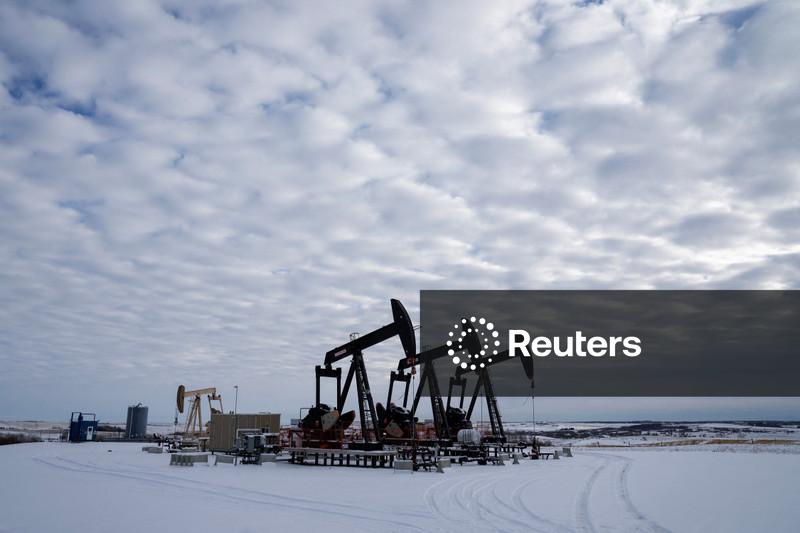
TOKYO, Jan 28 (Reuters) - Oil prices gained further ground on Wednesday as supply concerns lingered after a winter storm disrupted U.S. crude output and exports, while Middle East tensions lent additional support.
Brent crude futures rose 28 cents, or 0.4%, to $67.85 a barrel by 0410 GMT, while U.S. West Texas Intermediate crude climbed 35 cents, or 0.6%, to $62.74 a barrel.
Both benchmarks surged about 3% on Tuesday.
U.S. producers lost up to 2 million barrels per day or roughly 15% of national output over the weekend, analysts and traders estimated, as the storm strained energy infrastructure and power grids.
Crude and liquefied natural gas exports from U.S. Gulf Coast ports tumbled to zero on Sunday, ship tracking service Vortexa said.
A loss of production in Kazakhstan is also underpinning the rally, Toshitaka Tazawa, an analyst at Fujitomi Securities, said.
"But once supply fears ease, selling pressure is likely to return," Tazawa said.
He added that on balance, a projected global crude supply surplus this year amid geopolitical risks, including the Middle East tensions, could keep WTI trading around $60 a barrel for now.
Kazakhstan's biggest oilfield, Tengiz, is likely to restore less than half of its normal production by February 7 as it slowly recovers from a fire and power outage, two sources familiar with the matter said.
That was offsetting comments from pipeline operator CPC, which handles about 80% of Kazakhstan's oil exports, that it had returned to full loading capacity at its Black Sea terminal after completing maintenance at one of its three mooring points.
SUPPLY FEARS REMAIN AMID MIDEAST TENSIONS
A U.S. aircraft carrier and supporting warships have arrived in the Middle East, two U.S. officials, who declined to be identified, told Reuters on Monday, adding to President Donald Trump's capabilities to defend U.S. forces or potentially take military action against Iran.
That has raised the prospect Trump will follow through on his threat to attack Iran's senior leadership in response to the violent crackdown on nationwide protests, said ANZ analysts in a note.
On the supply side, the Organization of the Petroleum Exporting Countries plus Russia and other allies (OPEC+), is set to keep its pause on oil output increases for March at a meeting on February 1, three OPEC+ delegates said.
U.S. crude oil and gasoline stockpiles were expected to have risen in the week ended January 23, while distillate inventories likely fell, an extended Reuters poll showed on Tuesday.
But U.S. crude and gasoline stocks fell while distillate inventories rose last week, market sources said, citing American Petroleum Institute figures on Tuesday.
(Reporting by Yuka Obayashi in Tokyo and Emily Chow in Singapore; Editing by Jamie Freed and Neil Fullick)
Did you find this insightful?
Bad
Just Okay
Amazing