


With spring training ball wrapping up and the season fast approaching, Major League Baseball is making a pretty transformational move for a sport that’s been widely criticized for not keeping up with the times.
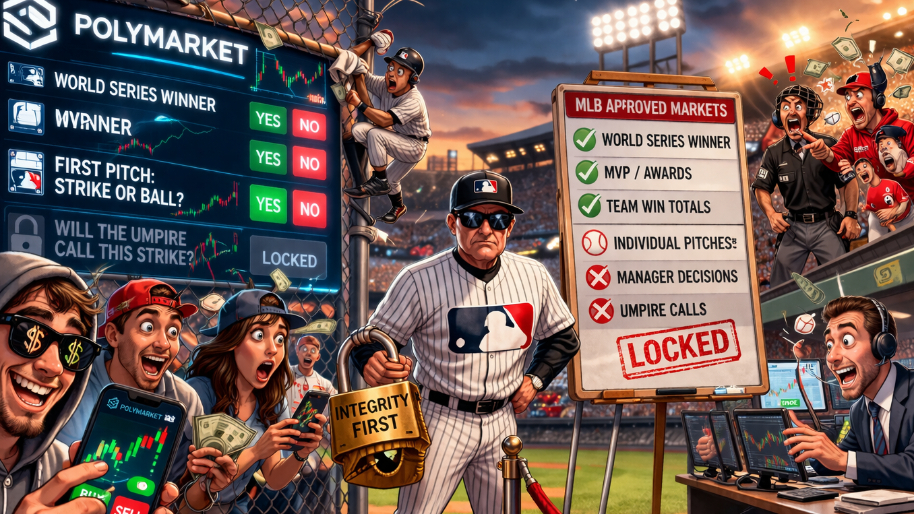
The league announced Thursday that it has named Polymarket as its official prediction market partner, giving the platform access to MLB logos, official data, and exposure across league events.
That said, MLB is being deliberate about how it enters the space.
The league also signed an agreement with the Commodity Futures Trading Commission to share information tied to prediction market activity. That creates a clearer line between the platform, the league, and regulators as this category continues to develop, and it suggests MLB wants oversight built in from the start rather than added later.
Prediction markets have grown quickly by letting users trade on real-world outcomes (from elections to sports) essentially turning opinions into positions that can be bought and sold. The format has attracted attention because it reflects crowd sentiment in real time, but it also comes with risks that traditional sports leagues aren’t used to managing.
In particular, concerns around fairness and the potential for outcomes to be influenced have followed the space as it has expanded. MLB addressed that directly in the agreement.
The league and Polymarket said they will restrict markets tied to events that could be easily manipulated, such as individual pitches, manager decisions, or umpire calls. Those types of outcomes can be influenced by a small number of people, which creates a higher risk of abuse if money is tied directly to them.
By limiting those categories, MLB is trying to reduce the chances of scenarios where participants could have too much control over the outcome being traded… and in turn, protect confidence in both the game and the market built around it.
Recent betting-related issues in sports have only reinforced the need for those guardrails, pushing leagues to take a more proactive approach rather than reacting after problems emerge.
Commissioner Rob Manfred said protecting the integrity of the game remains the league’s top priority, even as it explores new ways to engage fans.
It’s also worth remembering that MLB isn’t stepping into this alone.
Other leagues, including Major League Soccer and the National Hockey League, have already partnered with prediction market platforms. MLB’s entry adds further momentum to the space, but its more structured and regulator-aligned approach could end up setting the tone for how these partnerships evolve going forward.
Still, the long-term role of prediction markets isn’t fully defined.
They sit somewhere between sports betting and financial markets, borrowing elements from both but not fitting neatly into either category. That leaves regulators in the position of figuring out how they should be classified, monitored, and governed as participation grows.
At the time of publishing this article, Stocks.News doesn’t hold positions in companies mentioned in the article.
Did you find this insightful?
Bad
Just Okay
Amazing
Disclaimer: Information provided is for informational purposes only, not investment advice. We do not recommend buying or selling stocks. Stock price discussions are based on publicly available data. Readers should conduct their own research or consult a financial advisor before investing. Owners of this site have current positions in stocks mentioned throughout the site, Please Read Full Disclaimer for details Here https://app.stocks.news/page/disclaimer