


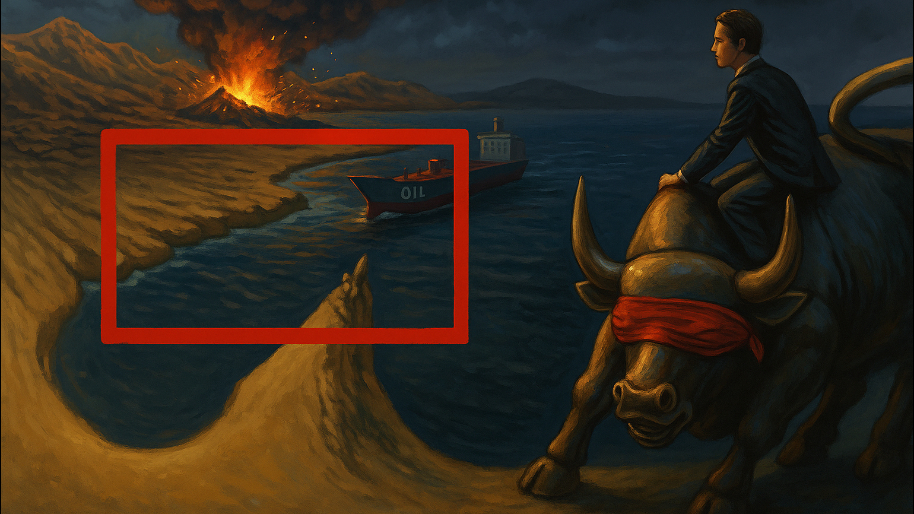
As if things weren’t chaotic enough, the Fed was already teetering on the edge of a policy meltdown before the weekend even started. You had doves flapping their wings, hawks sharpening their talons, and Jerome Powell looking like an exhausted teacher trying to stop a classroom food fight with nothing but a dry-erase marker and a prayer. Half the committee wanted to start cutting rates soon. The other half said, “Let’s wait,” worried that inflation might not be as dead as it looks.

I called it the “Fed’s Civil War”... not because it sounds dramatic (okay, a little), but because the internal split is real. Eight members want two cuts this year. Seven want zero. And just a few months ago, that “no cuts” camp only had four members. So yeah, the hawks are gaining altitude… and now, there’s even more smoke on the horizon.
Because over the weekend, Trump launched Operation Midnight Hammer… a targeted strike on Iranian nuclear sites. So now we have a “trade war (tariffs), a “Fed Civil War” (due to sticky inflation), a labor market that’s strong, but showing a few cracks around the edges… and now JPMorgan warning that oil could jump to $120 a barrel if things escalate in the Strait of Hormuz (a shipping lane that carries 20% of the world’s oil supply). In plain English: gas prices could hit 2008 levels, inflation could grow like a weed, and the Fed might be forced to rethink everything.

Last week, the Fed held rates steady for the fourth straight meeting, which sounds cautious… until you realize they’re balancing a dozen economic landmines. The infamous “dot plot” showed eight members still think two cuts are coming in 2025. But seven said, “Nah, leave them where they are.” Just a few months ago, only four were on Team No Cuts. Meaning, the hawks are gaining ground.
Then you’ve got Fed Governor Christopher Waller (a Trump appointee, for what it's worth) saying we could see cuts as early as the next meeting in July. On the opposite end, Mary Daly basically said “chill till fall.” And then over in the corner, Tom Barkin seems content to just watch the whole thing unfold from a safe distance (so much for that last name). But the Middle East strike might shift that whole timeline.

Here’s why the oil situation matters so much: if prices spike, it raises the cost of transportation, goods, and energy… potentially pushing headline inflation back toward 5%. That’s the kind of scenario hawks at the Fed live for. It justifies keeping rates elevated longer. But not everyone agrees. Ryan Sweet from Oxford Economics argues that higher oil prices don’t always mean sustained inflation. Sometimes, they simply crush demand… people drive less, spend less, and businesses start pulling back. If that kind of slowdown spreads, the Fed could have to cut just to keep the economy from stalling.
Even Powell himself downplayed the risk. “Those things don’t generally tend to have lasting effects on inflation,” he said last week, referring to energy shocks. In other words: we’ve seen oil spikes before. They come, they go. No need to freak out… yet (of course, that was before Trump bombed Iran, so hopefully he would dial up the urgency a tad now).

Still, markets won’t have to wait long for some sort of sign. This Friday, we get the May PCE report… the Fed’s preferred inflation metric. Economists expect core PCE (which strips out food and energy) to tick up to 2.6%, a slight increase from April. That’s not the kind of number that sets the Fed’s hair on fire… but it’s also not the kind of softness that justifies a rate cut either.
Meanwhile, Powell heads to Capitol Hill this week for his semiannual economic testimony… aka his regularly scheduled political roast. Lawmakers will grill him on inflation, tariffs, oil prices, and of course, Trump’s surprise airstrike. Bonus round: whether Powell still has job security, given Trump’s recent Truth Social rant calling him a “moron” and openly floating the idea of appointing himself Fed Chair (again… no, he can’t).

For now, futures markets are still betting on two rate cuts this year, starting in October. But with Middle East tensions rising and inflation showing signs of sticking around, the window to cut may narrow quickly. Or slam shut altogether.
At the time of publishing this article, Stocks.News doesn’t hold positions in companies mentioned in the article.
Did you find this insightful?
Bad
Just Okay
Amazing
Disclaimer: Information provided is for informational purposes only, not investment advice. We do not recommend buying or selling stocks. Stock price discussions are based on publicly available data. Readers should conduct their own research or consult a financial advisor before investing. Owners of this site have current positions in stocks mentioned throughout the site, Please Read Full Disclaimer for details Here https://app.stocks.news/page/disclaimer