CNBC’s 90-Person Sting Operation Exposes Walmart’s $100B Marketplace as a Counterfeit Playground
Everyone: “Walmart’s marketplace is the secret weapon to beat Amazon.”
Walmart, like two years later: “Cool, but what if we also accidentally turned into Alibaba circa 2013?”
Walmart’s online marketplace has been on a heater… growing sellers 900% over the last 5 years, pulling in nearly $100B in e-commerce revenue, and finally making digital sales profitable. The stock’s up 27% in the last year… which means shareholders are happy, happy, happy (as the great Phil Roberson once said). CFO John David Rainey hasn’t exactly been losing sleep either. Heck, if you’ve been following along at all, you know I’ve given Wally World their flowers too many times to count. I figured they had stolen Target’s playbook and just executed better plain and simple.

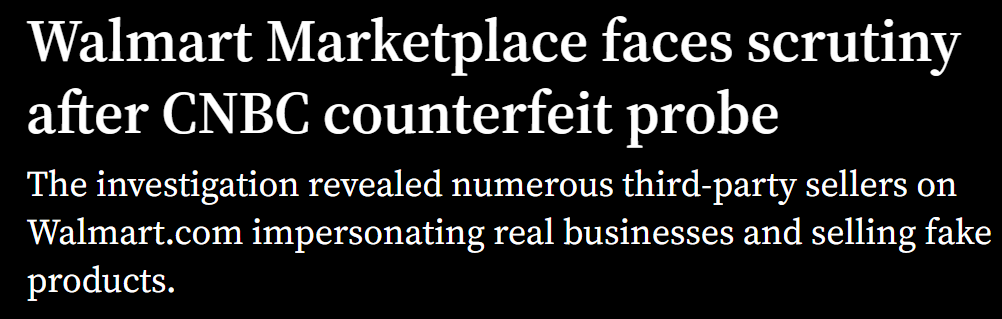
But then CNBC rolled in with a 90-person, CSI-level deep dive… and suddenly Walmart’s “secret weapon” looked less like Amazon’s polished rival and more like Wish.com with a greeter at the door.
And no, this wasn’t some random fluke. CNBC (shoutout to their elite “detectivery”) dug up 43 sellers who were literally stealing the identities of legit businesses. (Thermo Fisher, Rockwell Medical, mom-and-pop shops) all to move counterfeit garbage under Walmart’s blue logo. One Tennessee mom who bought “discounted” Neuriva supplements said the packaging was sketchy, so she sent it for testing. Surprise: fakes. Her response was probably the politest way of saying, “thanks for almost poisoning my family, guys.”
(Source: Mass Market Retailers)
If you’re anything like me this all probably has you prodding a pretty important question. So how does a 63-year-old, $681B retail monopoly with 4,600 stores become so careless. Easy… they got greedy. Former employees said vetting used to be strict. Then the pandemic hit, sales went vertical, and management’s new philosophy was essentially: “approve, approve, approve.” Forget invoices, forget background checks. If you could fog a mirror and upload a driver’s license, you were in.
To their credit, the strategy did exactly what Walmart wanted: it attracted sellers who were fed up with Amazon’s iron-fisted rules. But it also turned their digital marketplace into one giant playground for scammers. Amazon asks for invoices for 10 or 100 units. Walmart employees (known for their unbelievable work ethics) went, “Just show us one, this is too tedious.” Gee, I wonder how counterfeiters cracked that code?
When CNBC started nosing around, Walmart tried to clean house… you know, the classic “quick, throw it under the bed and in the closet” routine. Overnight, beauty and personal care listings started disappearing, new vetting policies magically appeared, and executives pretended “trust and safety are non-negotiable.” Sorry, but if your idea of “non-negotiable” comes after a 90-person sting operation, you’re not leading the market. You’re following with your pants around your ankles.

Obviously this is one of the worst PR disasters the Walton family could ever dream of… but it’s also a long-term setback. Amazon may have been a counterfeit swamp a decade ago, but it learned (painfully) that trust is the moat. They invested in policing sellers, battened down the hatches, and now they can tell regulators with a straight face, “we’re cleaning this up.” As for Walmart, they’re still arguing that if they refund you for the fake lotion, we should all just move on. (Accountability has never been Walmart’s best quality.)
Fortunately for all of humanity who still shops at Walmart, that won’t fly much longer. The Shop Safe Act (the bill Walmart and friends keep lobbying against) would make platforms liable for this junk. If it passes, Walmart’s “approve everybody” era could turn into “approve almost nobody.”

Look, I get it. Walmart wanted to be Amazon. But if you’ve ever tried to sell anything on Amazon’s marketplace you know it’s not much different than a strict TSA checkpoint… annoying, but you know you’re probably safe. Walmart’s marketplace reminds me less of Amazon and more of a stroll through Chinatown where every other table has “Rolex” watches and “Ray-Ban” sunglasses that were definitely not made in Switzerland or Italy. And that’s a horrible look for a brand built on trust.
At some point, Walmart has to decide if it wants to be Amazon’s polished mall… or a sketchy pawn shop where half the “merchandise” looks like it came out the back of a U-Haul? Right now, it feels way too much like the latter… and that’s not exactly the script shareholders signed up for.
At the time of publishing this article, Stocks.News holds positions in Amazon as mentioned in the article.